

It’s almost All Hallow’s Eve, y’all, and you know what that means! It’s time for the old Monster Mash. The Skeleton Shuffle. The Spooky Boogie. And no, I’m not talking about all the goblins and ghouls filling up your neighborhood! I’m talking about the world of fast fashion and the mountains of waste – and other human miseries – it produces.
In this special haunted edition of The Carbon Fables, we’re going to look at the eerie costs of fast fashion – and some of the slow ways to fix it. So, light up your Jack-o-lanterns and grab the candy bowl, friends. You’re gonna need it.
A Menagerie of Menace
We have a depressing amount of clothing waste all the time – just look at the dystopian culture of the Shein Haul – but Halloween seems like the ultimate expression of our consumerist credo. For the sake of one night of – admittedly very fun – candy shakedowns, we swaddle ourselves in enough plastic to make an oil exec blush.
In the US, we’re spending and average of $100 / person on Halloween – candy included – which totaled $12B in 2023. While that might sound like a reasonable sum to wow your friends with your latest shapeshifting specter, it’s not really the money that’s the problem. It’s the waste.
Thirty-five million of those costumes will simply be thrown away, doomed to the sepulcher of a hair-raising landfill. I suppose with micro-plastics already found in every major human organ, what’s a few more costumes?! But imagine how the costumes feel! Like an even sadder version of Toy Story, in return for offering you a single night of fun, you repay them with as long as two hundred years in the garbage dump.
Costumes, of course, are also complex waste. It takes a lot of materials to give me six-pack metal abs like Iron Man! 83% use non-recyclable plastic, and in combination with all that cloth, costumes create nearly 11 million pounds of textile waste a year. Then again, we also know that plastic is never really recyclable. A lot of it gets downcycled, and only around 6% of it is recovered anyway.
The Bigger Picture
If you thought Halloween was spooky, just wait until you see the everyday jump scares of the American fashion juggernaut:
Fast fashion began in the 90s, using newly ratified free trade tariffs and China’s entrance into the WTO to get a lot of cheap things made really quickly. The goal was to rapidly change styles, with clothing brands coming out with new trends every week. The catch? Making so much stuff on the cheap means more synthetic materials, more labor abuses, and more waste. Part of the appeal of fast fashion to corporate executives, after all, is that they can simply landfill what doesn’t sell, resulting in 92 million tons of textile waste each year.
The trend has only gotten worse in recent years. The industry doubled between 2000 and 2014, with people buying 60% more clothing and only wearing it half as long. In part, the low quality and abundance of fast fashion also trains us to discard it more easily. It wasn’t built to last, so it doesn’t. And then, when it does break, we’ve lost much of our old ecosystem of tailors and ateliers who might fix your garments – plus our own loss of mending skills (hence my sewing class, woo!!).
Like many things in consumer culture, this is also a human rights issue on both ends of the supply chain. At the top of the funnel, we have terrible labor conditions on cotton farms and in sweat shops – sweat shops that have grown sneakier as the fashion industry has faced at least a little pressure to improve. At the other end, you also have much of our “donated” clothing – the articles not being sent straight to landfill – swamping cities in Africa. If you want to see this viscerally, just watch the documentary Brandy Hellville on HBO.
All of this material isn’t made in a vacuum either. Between plastics – which are made from oil – and mountains of cotton, fashion also has climate implications. I’ve seen estimates putting the fashion industry's emissions toll between 4 and10% of total emissions. Growing cotton also sucks up water and soil nutrients like a vampire sucking up blood (unless you’re the vegetarian, sparkly kind of vampire like Edward Cullen…)
How to slay the monster
Are you stress-eating Halloween candy yet? Shoving handfuls of candy corn into your mouth? (I know candy corn is disgusting, don’t at me.) Well, the good news is, as consumers, we have an incredible amount of power to enact change in this system. Unlike climate change, which requires complex interactions between technology and policy – all of which, of course, we can adopt and advocate for – changing our fashion habits mostly just requires making different choices. Enter slow fashion.
Slow fashion is exactly what it sounds like: slowing down the cycle of production and waste. 90% of clothing is thrown away before it needs to be, which creates an opportunity for us to try to change the outcome. I think Halloween is still a useful metaphor here, so let’s imagine a few slow fashion principles through the lens of a costume:
Can I mend it? Can I thrift it?
Fast fashion wants you to throw things away the moment a button comes off. (Which, of course, incentivizes them to make weak buttons…) Perhaps last year you got a tear in your witch’s hat when you were running from a poltergeist. Fortunately, there’s still hope.
Maybe it takes a moment of mercantile mindfulness, but think of how you can fix it. You could learn to sew – I swear it’s not as hard as it sounds! You could also find a tailor. Even though custom tailors are rarer than they used to be, most dry cleaners have the ability to make simple repairs.
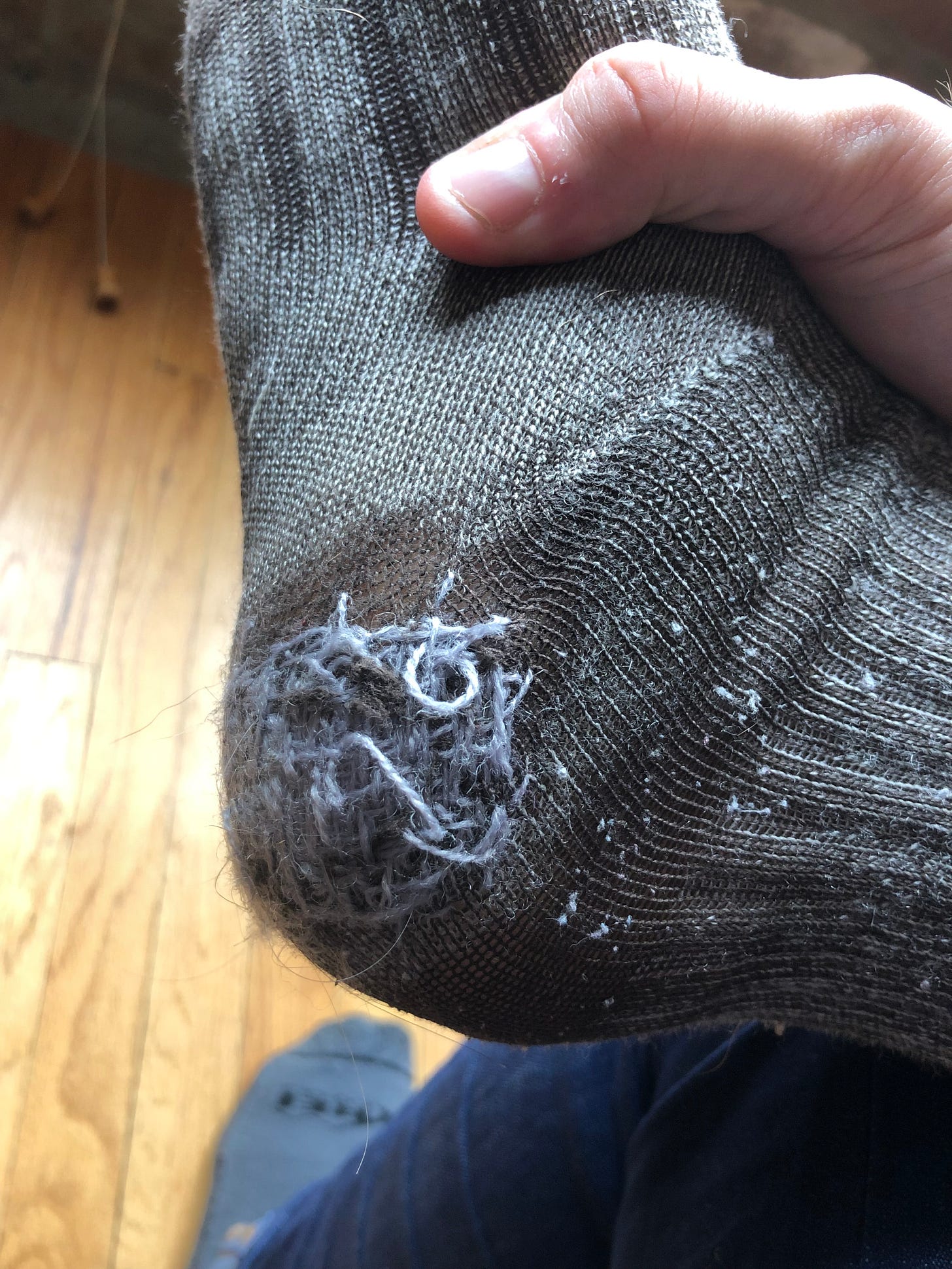
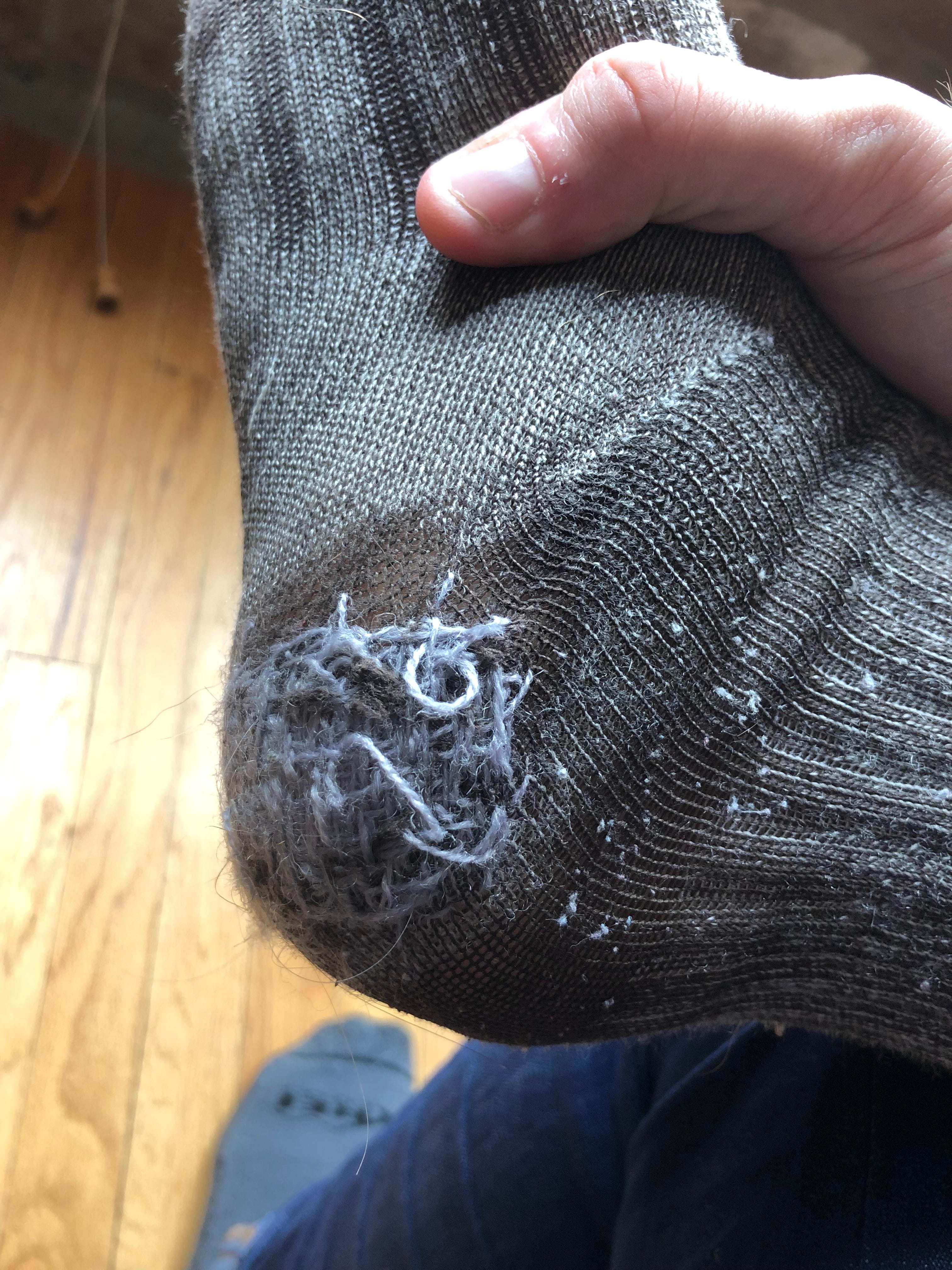
You can also plan ahead and buy materials that are easier to fix. For example, I only wear wool socks now because they’re so easy to patch. Ever heard of darning? Get yourself a simple darning kit and you can create a new weave of thread over the hole – and save yourself the icky feeling of the cold floor freezing your toesies. I might not be great at it (picture below of my darning efforts…) but you shouldn’t be looking at my feet anyway, weirdo!
And if you’re going to dump zombie blood on your outfit, maybe it doesn’t need to be new in the first place. There’s an incredible amount of stuff at thrift stores, so you can at least give something a second life. Of course, thrifting isn’t an excuse to keep dumping the clothes you already have – only 20% of donations make it to the thrift shop floor. But if you absolutely must have a seersucker suit, at least you can try to find one on the rack at Village Discount. You can also thrift your own closet. You’d be surprised by the stuff you’ll find in there! (Including a closeted Babadook…)
Built to Last
While the mean city streets of Chicago have chewed up an army of my sneakers, I have a pair of quality walking shoes that are still kicking ten years later. Made by Oboz, they have firm insoles, which means they haven’t broken down, and the leather and rubber hardly show any wear at all despite a decade of Chicago winters.
While leather and rubber might not be the best materials to use for rapid consumption – just think about the methane from cows, the chrome waste from leather treatment, and the hundred-year life-cycle of rubber – if they’re giving me nearly unlimited mileage on these shoes, it’s probably better for the environment than going through a dozen pairs of sneakers.
It’s also worth thinking about what happens to your shoes after they’ve finally been worn down. You might have to pay more for a quality shoe, but some brands will offer to re-sole them in perpetuity, meaning you’re making one purchase rather than several. On the other end of the spectrum, look for brands who will actually take back your shoes and recycle them (though, as with all things eco-friendly, you have to watch out for the usual greenwashing).
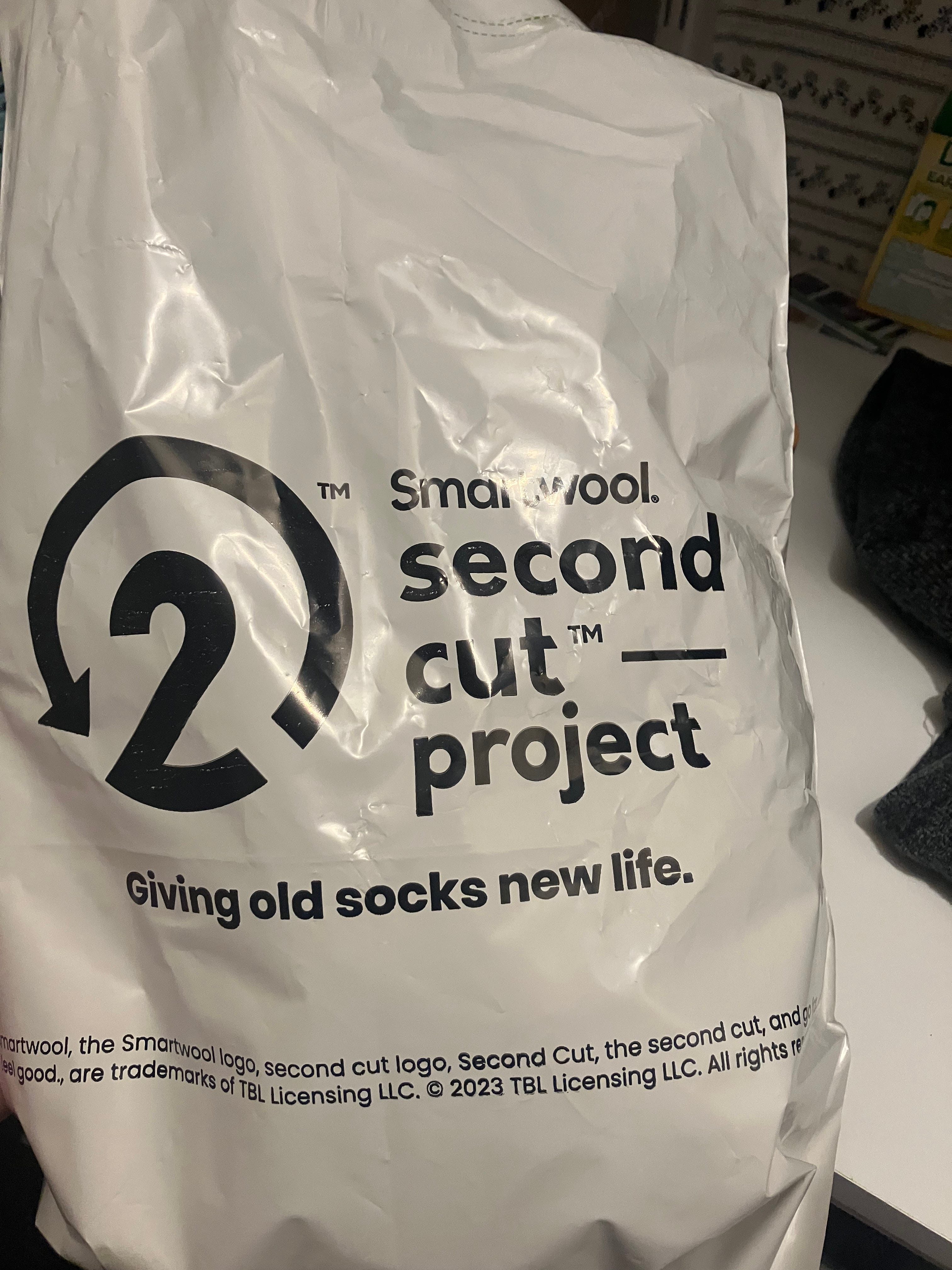
Remember my wool socks? When they’re finally cashed out – which is usually after about three or four darnings when the holes become impossible to plug – I’ve even found a brand who will take them. Smartwool’s Second Cut Project is taking old socks and reusing them to make new socks with a 50-50 blend of wool and old socks. In theory, wool can also be re-spun, so I’m hoping the industry can get to a point of full circularity someday too.
Changing the Culture
I think an important part of this story is giving ourselves permission to stop wearing new things all the time. In 2015, sick of buying costumes every year, I started going as Harry Potter EVERY YEAR. I might look ridiculous for two hours at my annual Halloween party, but now it’s part of the joke, and my friends are excited to see how I continue to use the same costume – modifying it with a stick I found for a wand, etc. etc.
Of course, it’s also important to recognize that sexism is part of the problem with our fashion addiction – it’s not lost on me that male privilege lets me walk around town like a schlubby dad-bod tuna fish without consequences. Meanwhile, 41% of women 18-25 feel pressured to never repeat an outfit. But I think it’s also time we push back on those expectations, both for feminism and the planet. Repeat your outfits proudly! If someone makes a snide comment, tell them to bury their head in a landfill.
Being eco-friendly also doesn’t mean you can’t be creative. When my partner bought a giant pair of dragon wings off the internet, she set out to prove to her obnoxiously eco-friendly boyfriend that she could use them again and again. And she has! So far, she’s been a dragon, a bat, and a mid-transformation vampire – with more to come, surely.
We end…on a treat
Listen, I’m not trying to kill your fun. Halloween is a time-honored tradition of spooky slime and silly times. I just want us to have fun without destroying the planet. And to reward you for eating your vegetables alongside your candy today, I’m going to curse you with my latest creation of Halloween absurdity.
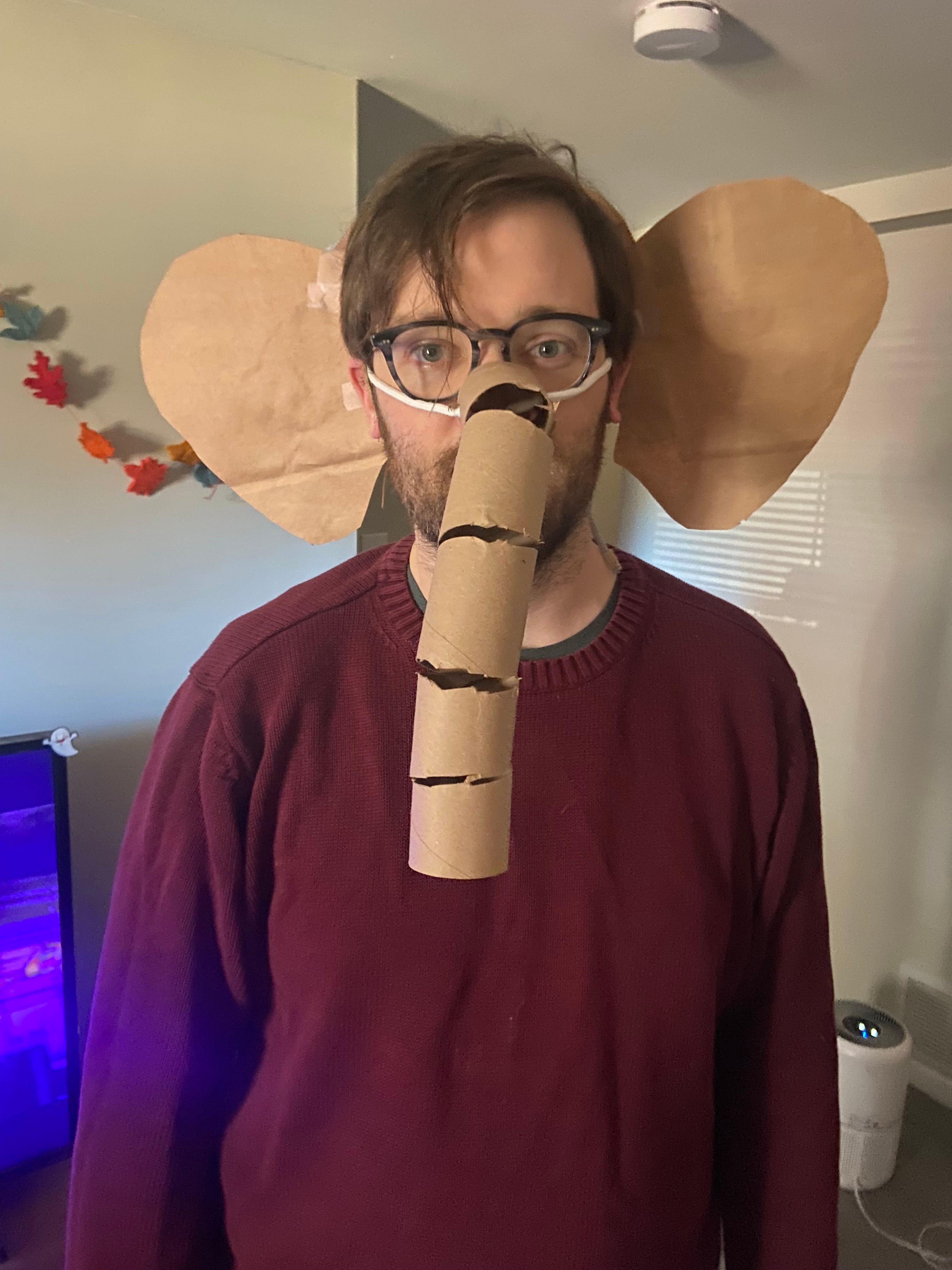
This week, in addition to my usual Harry Potter madness, I’m going out as an elephant. My nephew is nearly two, and he loves animals. To celebrate, he’s going to go as a circus ring leader, with all us adults as his favorite jungle creatures. I could have followed the guide above and bought a second-hand elephant costume. Instead, I made one from an old paper bag – which, untouched by paint, can be recycled when I’m done. Behold our new mascot. The Carbon Fables Elephant.
P.S. Don’t forget to compost your pumpkins! You can have a spooky guy on your porch AND avoid a kilogram of face-melting methane. If you’re feeling really frisky, you can even go to a pumpkin smash, where they let you hit your pumpkin with a bat before carting it off to become new soil! Here’s a list of pumpkin smash events in Chicago. Hopefully I’ll see you there!

*Art by Samuel Palmer, Harvesters by Firelight, 1830, Courtesey National Gallery of Art
**Email header art by Karl Nilsson (sigvardnilsson on instagram), includes portions of Beck's Castle Ruins by László Mednyánszky Denbigh Castle, Wales by Edward Dayes & Paysage de la Grand Chartreuse attributed to Jean Lubin Vauzelle