
Everyday Magic
Beautiful things that are and beautiful things that can be

Every spring, as the weather breaks, the crowing hordes descend upon Chicago. Squawking and flapping their arms, they fill the paths of the Montrose Point Bird Sanctuary. And I’m not even talking about the migrating birds! I’m talking about the birders. Armed with binoculars and telescoping lenses, they’re engaged in the ultimate IRL Pokémon challenge. There are around seven million birds passing through Chicago during migration, and they gotta catch ‘em all.
This spring, I joined a birding group hosted by two of my church’s pastors (both avid birders). For four weeks, we met in the early hours of the morning (when the birds are most active), looking for the rarest breeds that only pass through Chicago during a short window. And oh, what colors we saw! There were rose-breasted grosbeaks, yellow-rumped warblers, cardinals, and more. I even saw a raccoon eating from a man’s hand, which, while frowned-upon, is the kind of chaotic moment cities are made of.
It took me a while to get the hang of translating my line of sight onto my binoculars (what I, and no one else, like to call “going down scope” as if I were on a submarine). Always the neophyte, it took me about two weeks to even figure out I could spin the wheel to focus the lenses. Although, to be fair, I got my binoculars on Facebook marketplace from a Polish man for $10, so there wasn’t exactly an instruction manual…
Nervous as I was about my complete lack of knowledge, there really was something magical about birding. Like anything in America, there were people who took it far too seriously — I mean, how else are we meant to form an identity in these atomized times? One woman looked about ready to slap me when, asking me what I was looking at, I stupidly pointed at a Blackburnian Warbler and said “that orange guy over there.” (Maybe she would have preferred the Latin name…) Still, the overwhelming majority of people were there in search of something true and cosmic, the fleeting nowness of seeing a real-life creature in the wild.
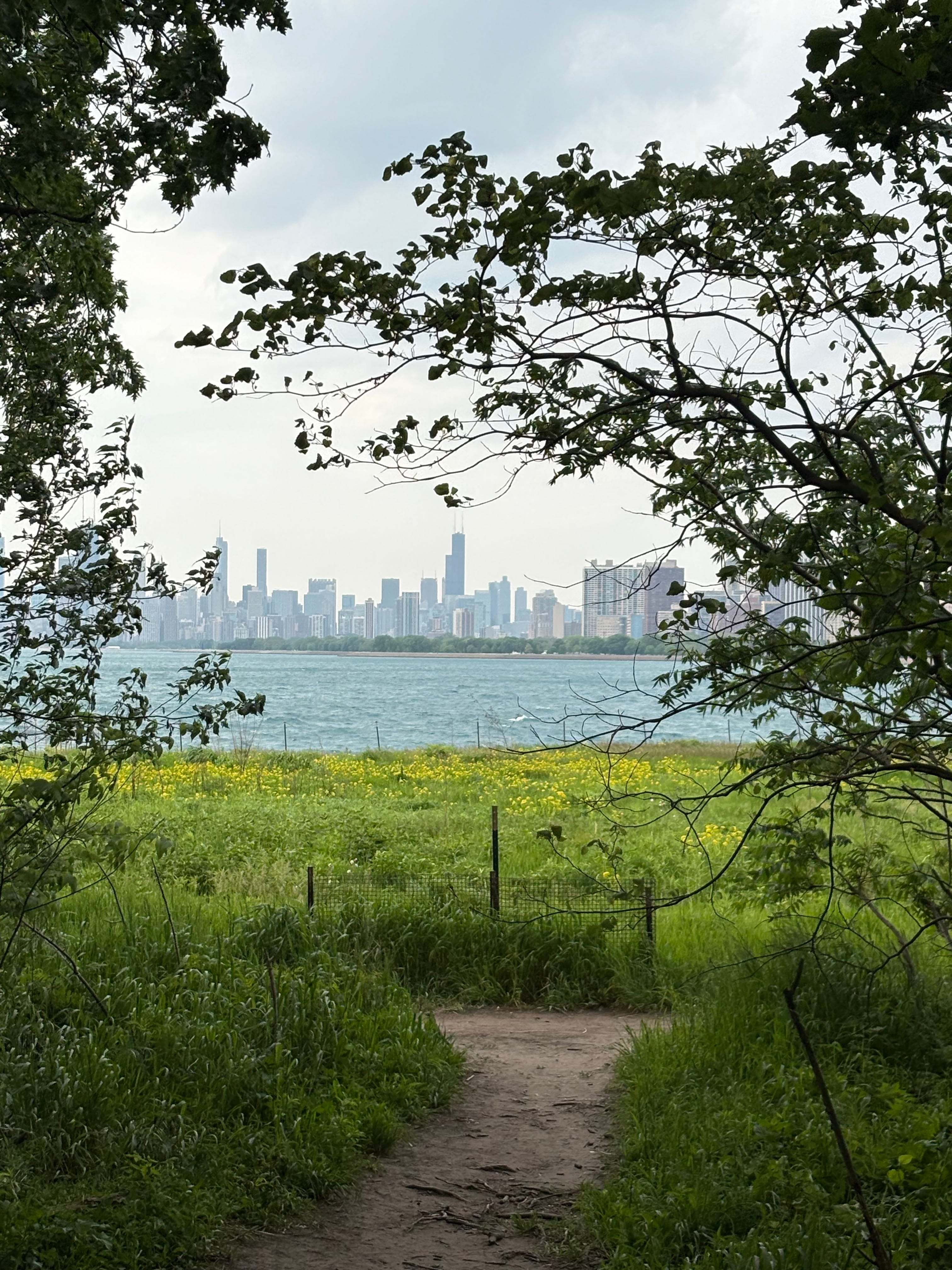
It is in this context that I come to today’s topic: magic. It’s all around us, sometimes flying right overhead without us noticing at all. And naturally, the birds got me thinking about what other kinds of magic were hiding in plain sight. If that kind of magic can exist, what other fabulous things could we be summoning for our communities? For our planet?
The magic bush
The Montrose Bird Sanctuary is a gorgeous place. Spread out over fifteen acres, it combines multiple ecosystems in one. Stretching out into Lake Michigan at the end of Montrose Beach, it has sand, prairie, and forest — it’s basically chock full of places to eat, mate, and nest. In recent years, it’s even been the home to endangered Piping Plovers, birds that have become local celebrities covered by Chicago newspapers and thronged by fans (at a safe distance, of course).
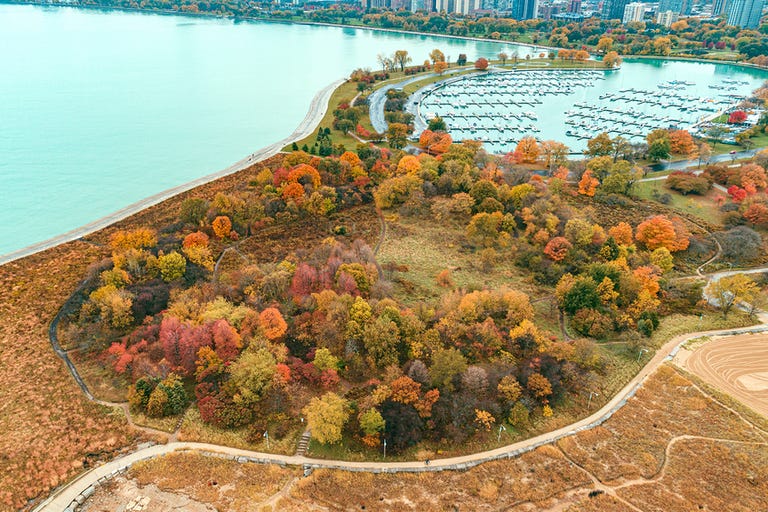
This Eden, however, wasn’t always thus. My pastor, Vince — a brilliant man whose love of birds is matched only by his human kindness — told us its history in a bird-themed sermon (I know I’ve said it before, but my church is cool). The sanctuary started out as a military installation, site C-03, which was used to house Nike missiles during the Cold War. Bordered by Lake Michigan, Chicago used to have a lot more military presence. Even Navy Pier, now the home of a massive Ferris Wheel and a metric ton of hot dogs, was once actually used for troop transport by the…well, Navy.
After the army left, this began to change. To obscure the missile site, they had planted honeysuckle bushes, which birders noticed were attracting rare species — a 150-yard stretch fondly referred to as the “magic bush.” After a deal with the US Wildlife Service — and $400,000 in native plants — Montrose Point formally opened as a bird sanctuary in 2001.
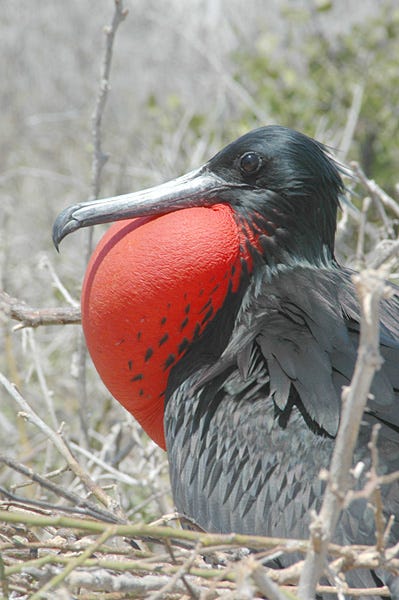
Back to the magic! Grown in a dense thicket, the lush branches of the magic bush are a favorite of our feathered friends. And, for birders, it’s known for somehow attracting the most sought-after birds. Some mornings, after a storm has caused them to land, taking a brief respite in their seemingly endless migration, something truly incredible will have roosted there. In the 1980s, there was even a giant black frigate bird, blown off course from the Gulf Coast by a hurricane. Pretty impressive for a bush planted haphazardly by the army, huh?
The everyday magic of water
My pastor told us another story — one I’d been lucky enough to hear tell of before — of Chicago’s magic water pump. Nestled into the northwest forest preserve at Schiller Woods, the magic pump pulls from an underground aquifer. As rainfall passes through the stone chamber above, it’s thought to have picked up healing powers, drawing long lines of hopeful city-dwellers every morning eager to fill their buckets. (Polish-Catholic Chicagoans even think it was once blessed by Pope John Paul II, though there’s no evidence of that.)
A couple years ago, a brewery near me, Hop Butcher, even pumped a bunch of gallons and brewed a beer with it. When I went in to try it, the magic brew tasted suspiciously like…beer. But I can’t say for sure it didn’t heal me. Who knows what maladies would have come my way had I not sipped upon the magic potion?
Thankfully, I didn’t have to go too many years without the magic in my veins. At church last month, I got to try it again. Pastor Vince went and filled a jug at the magic pump, bringing it for the congregation to taste. We lined up as if it were communion, sampling the local magic for ourselves.
Before we drank the magic water, Vince preached about Deuteronomy 8 and the years the Israelites were lost in the desert, of the manna falling from the sky and the magic water bubbling up from the stone. Ultimately, those passages tell us something about our relationship with the world. With sinks that gush with the life force of Lake Michigan at a moment’s notice, we forget how remarkable it is that water exists at all. Even the most regular of molecules are a sacred bit of magic.
It reminds me of when I was a Boy Scout. In high school, I returned to Philmont, a famed hiking camp in New Mexico. Set on 140,000 acres, I spent the summer after senior year on their trial crew, digging new paths with a pick axe and hiking nearly twenty miles a day. Out in the bush, there are no magic pumps. You simply hope you’ll come upon a stream, pumping the ice-cold mountain water through a filter and into your bottle. It’s then that you can feel the wonder of the wanderers in Deuteronomy. Just like the birds flitting through the sanctuary once a year, you can really sense that life is something the planet has offered up at random, something we should be more grateful for.
Other vital transformations
Having covered these two pockets of urban magic, I wondered what other secrets might be whispering around me. I set out on a walk through my neighborhood on a magic hunt, turning into Horner Park. Covered in hills, restored prairies, and baseball fields, Horner is a massive (for the city) sixty acres. Set against the North Branch of the Chicago River, it too is filled with nesting birds and people of all stripes. This time, though, searching for magic as I was, I wondered how it came to be.
As it turns out, Horner Park is exactly like the Montrose Bird Sanctuary, a paradise snatched from the city’s past pollution. Instead of a military base, Horner was once the home of a massive clay pit. Starting in the 1800s, Chicago was famous for its brick business, eventually churning out a BILLION bricks a year by 1920. This well-baked terracotta still graces nearly every building within the city’s limits and is a massive part of our architectural legacy.
It was in 1946 that things began to change. Part of a movement in the city to increase recreational space, the city acquired it and started transforming the industrial park. And now, it has the sort of rabid parents — of both fur babies and baseball tots — that will almost certainly defend the land until their dying breath.
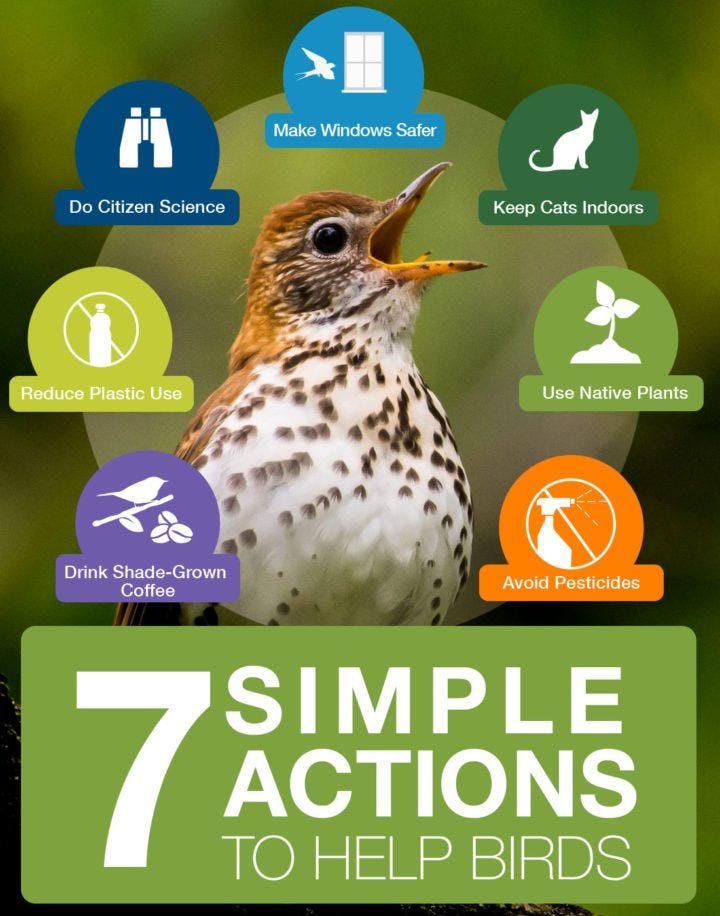
If we can notice this magic, remember its incantations, then maybe we can discover yet un-uttered spells. Take the birds we mentioned earlier. It’s no question that despite our lovely sanctuaries, Chicago is a treacherous place for birds to pass through. Our buildings, with their mirrored glass and bright lights, confuse the poor birds, driving bird strikes that leave many of them dead. Add in outdoor cats, pesticides, and rat poison, and it’s no surprise the world has lost three billion birds since 1970.
If we’ve proven anything in this piece, however, it’s that the unmagical doesn’t need to stay that way. When you cast a spell, you’re turning nothing into something, creating a shimmer in the air that can summon a very different kind power. To help the birds, many businesses have started adding stickers to their windows, and residents are dimming their lights at night. Even when landlords refuse, I have a friend that’s waging a publicity war against her building to get them to take bird strikes seriously.
Ultimately, it’s this remaining possibility of transformation that keeps me hopeful, both for the birds and for climate change. No one in 1950 could have imagined that the C-03 missile site would become a bird sanctuary, and no one in 1930 could have imagined that the clay pits at California and Montrose would become Horner Park. We have no idea what the world will turn into a decade from now. Ten decades from now. We just have to open our mouths and see what spell pours out.
What’s keeping us from magic
In these hectic, over-stimulated times, however, it probably won’t surprise you to hear that some days, I forget altogether about all this magic surrounding us. I get lost in the hustle and bustle, the frantic temporal panic of a to-do list that never feels quite complete. Even worse, I’ve internalized it all. I have a tendency to work beyond the point of exhaustion, positive the thing I’m seeking is just beyond that final burst of productivity.
It’s no surprise, then, that so many of my books revolve around instrumentalism. Characters that have become a tool, a means to an end. I think all writers, when chasing a moral question, are really just telling the world something they desperately need to hear themselves. And, in my case, it can be summed up in one phrase uttered in The Sermon of Loss: “I am not a thing.”
It reminds me of a lesson from Taoism, a fable from the Taoist sage Chuang Tzu and his tale of the “useless” tree. Broad enough to “shelter several thousand oxen” the tree had lived hundreds if not thousands of years. And yet, a carpenter passed it by, not even stopping to stare at it in awe like his students did. “You’re a carpenter!” they cried. “How can you not be interested in such a perfect tree?” The carpenter, to their surprise, called it useless. If the wood was any good, he figured, someone would have cut it down long ago. The lesson — as if often the way in Taosim — is to become the useless tree. If you make yourself cuttable, dedicated only to productivity, don’t be surprise when you end up cut down.
Instead of being cut down, I offer you this advice: try to be a magic bush. Take your days of rest in the sunshine. Grow thick with berries, turning your branches into dozens of nooks and crannies. And, if you’re lucky, maybe a bird will stop by. It doesn’t even have to be a rare one. Anything with wings and a beak will do. And once they’ve perched, I hope you feel how outrageously magical life is.
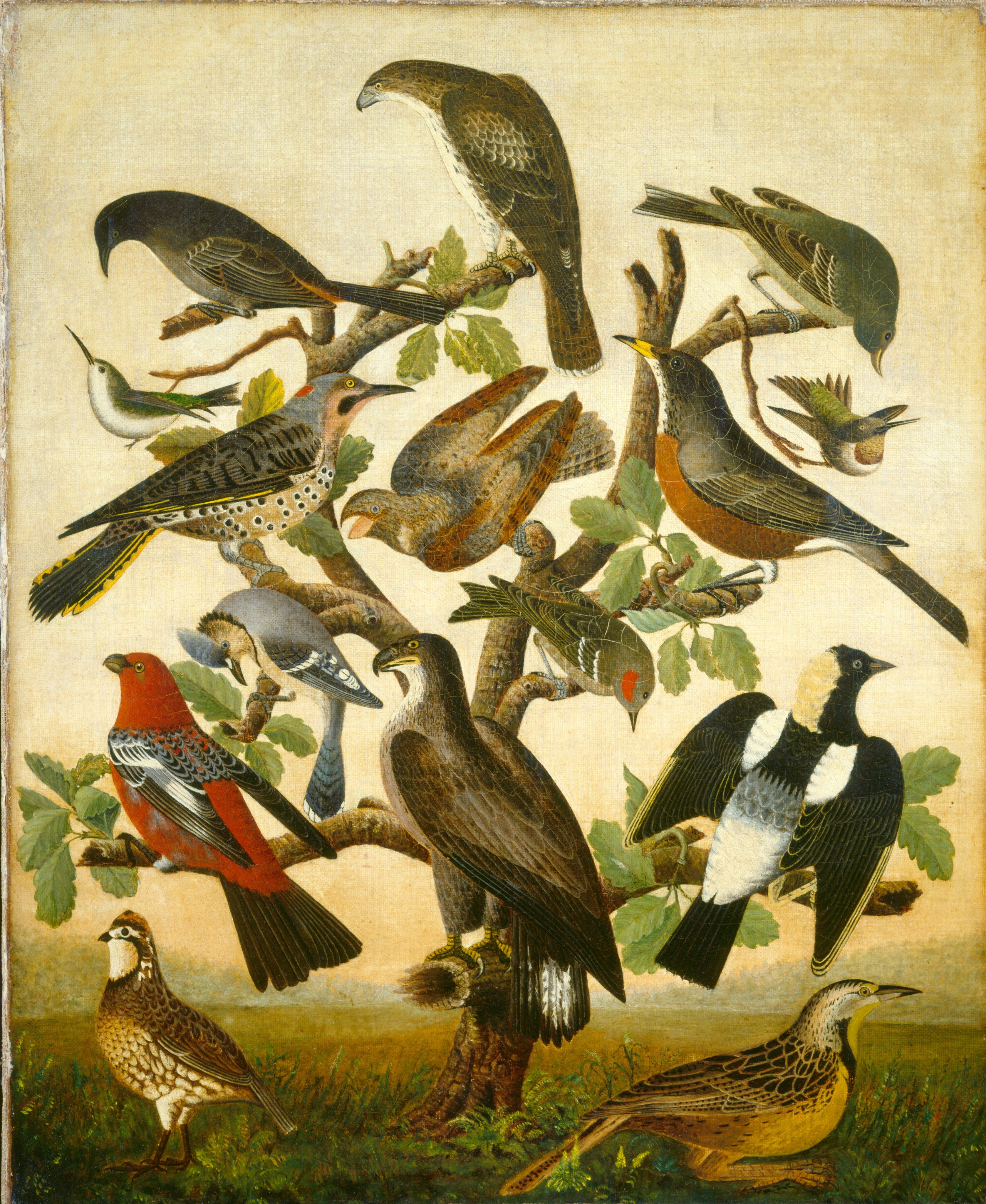
*Art: Birds, c. 1840, courtesy National Gallery of Art
**Email header art by Karl Nilsson (sigvardnilsson on instagram), includes portions of Beck’s Castle Ruins by László Mednyánszky Denbigh Castle, W he ales by Edward Dayes & Paysage de la Grand Chartreuse attributed to Jean Lubin Vauzelle
I once canoed the Chicago River from Clark Park just north of Belmont up to around Foster and then back. There is a lot of *doing* along the Chicago River--infrastructure built up to make sure the river doesn't subsume the land, infrastructure that has to be built, maintained, occasionally rebuilt.
And then you hit Horner Park with its prairie. There are no barriers preventing the land from falling into the river, and yet the land doesn't fall into the river. To boot, it was home to *easily* the most diverse bird and reptile life along that stretch of the river. Just by being what it naturally is.
"You do nothing and nothing's not done." -Lao Tzu, Tao Te Ching Chapter 48, Le Guin Version
Bro I’ve been hanging out with a couple of beavers in Horner Park in the evenings. Definitely a magical experience